
Why Should Breweries Invest in Customized Craft Beer Equipment?
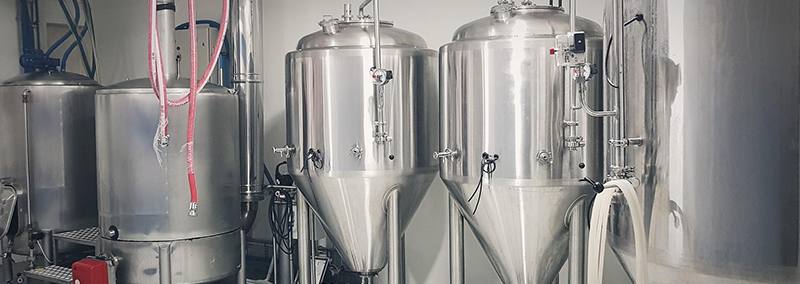
Customized craft beer equipment helps breweries improve production consistency, reduce resource waste, and support product innovation. A brewery producing 1,000 barrels per year needs different tanks, automation, and layouts than a producer making 20,000 barrels. A tailored craft brewery system can improve workflow efficiency, reduce energy use by 20%–40% in some applications, and provide better control over brewing parameters.
Craft beer production has changed significantly since the early 2000s, with breweries focusing more on specialty products, seasonal releases, and small-batch production. Unlike large-scale beer manufacturing, craft breweries often produce many beer styles within the same facility. A single brewery may create IPA, lager, stout, sour beer, and experimental batches during one year, requiring equipment that can handle different recipes and production schedules.
Standard brewing systems are designed for general production needs, but they may not match the specific requirements of every brewery. A small urban brewery with limited floor space has different needs from a regional brewery supplying multiple markets. Customized equipment allows manufacturers to adjust tank size, piping design, heating systems, cooling capacity, and automation levels according to production plans.
“A brewing system should match the brewery’s production methods, available space, and future expansion plans instead of forcing the brewery to change its workflow.”
Production efficiency is one of the main reasons breweries choose customized systems. Equipment layout affects how quickly raw materials move through milling, mashing, boiling, fermentation, and packaging. A poorly arranged system can increase transfer time and require more manual labor.
A customized brewhouse can improve the connection between different production stages. For example, shorter piping distances reduce pumping requirements, while properly sized fermentation tanks improve batch scheduling. Breweries producing around 5,000 barrels annually may require a completely different tank arrangement than breweries producing 50,000 barrels.
| Production Scale | Typical Equipment Consideration |
|---|---|
| 500–2,000 barrels/year | Flexible small tanks, manual or semi-automatic controls |
| 2,000–20,000 barrels/year | Multiple fermentation vessels, improved automation |
| 20,000+ barrels/year | Larger brewhouse, advanced monitoring, energy systems |
The difference in production scale directly affects equipment selection, especially when breweries plan future growth. A customized system allows expansion without replacing the entire setup.
Beer quality depends heavily on accurate control during brewing and fermentation. Temperature changes, oxygen exposure, and fermentation conditions influence flavor, aroma, and shelf stability. Customized equipment helps breweries maintain more consistent conditions between batches.
Fermentation tanks designed according to brewery requirements allow better temperature management. For example, lager production usually requires longer cold fermentation periods, while many ale styles need different temperature ranges and shorter fermentation cycles. A brewery producing several beer styles can benefit from separate tank configurations.
Research from brewing operations has shown that process automation can reduce production variation. Modern control systems can record temperature, pressure, and fermentation data during each batch. By 2024, many commercial craft breweries had adopted digital monitoring systems to improve repeatability and reduce manual adjustments.
“Consistent brewing conditions allow small breweries to maintain the same flavor profile across different production batches.”
Energy consumption is another important factor when selecting brewing equipment. Brewing requires significant heat for mashing and boiling, followed by cooling during fermentation. Energy costs can represent a noticeable part of brewery operating expenses, especially for facilities producing thousands of barrels annually.
Customized equipment can include heat recovery systems, efficient boilers, and improved insulation designs. Heat generated during wort boiling can be reused for water heating, reducing energy demand. Depending on brewery size and system design, energy savings of 20%–40% have been reported in optimized brewing facilities.
Water efficiency also influences equipment decisions. Traditional brewing processes often require several liters of water for every liter of beer produced because cleaning and sanitation consume large amounts of water. Many modern breweries aim to reduce this ratio through improved cleaning systems and better equipment design.
Customized cleaning systems can reduce unnecessary water use by controlling cleaning cycles, chemical concentration, and rinse volume. Breweries that upgrade process equipment often report water reductions of around 10%–30% compared with older systems.
Space limitations are common among craft breweries, especially those operating taprooms or converted industrial buildings. Standard equipment packages may not fit efficiently into these locations because building dimensions vary significantly.
Customized brewing equipment allows manufacturers to design systems around existing spaces. Tanks can be arranged vertically, piping routes can be adjusted, and working areas can be improved for safer operation. A brewery with a 200-square-meter production area requires different planning compared with a 1,000-square-meter facility.
“Better equipment placement can reduce unnecessary movement and make daily brewing tasks easier for employees.”
Product development is another area where customized systems provide advantages. Consumer preferences continue to change, with increasing interest in low-alcohol beer, hazy IPA, barrel-aged products, and limited seasonal releases.
Breweries that use flexible equipment can test new recipes without interrupting regular production. Small fermentation tanks, pilot systems, and adjustable controls allow brewers to create smaller batches before large-scale release.
For example, a brewery may produce a 50-barrel standard batch while testing a 5-barrel experimental recipe. This approach reduces material waste and allows faster product testing before investing in larger production.
Customized equipment also supports better long-term financial planning. Although the initial cost may be higher than purchasing standard equipment, a system designed for actual production needs can reduce replacement costs and operational problems.
A brewery that purchases unsuitable equipment may later need additional tanks, upgraded cooling systems, or modified layouts. Investing in a suitable design from the beginning can reduce these additional expenses over several years.
| Customized Equipment Feature | Possible Benefit |
|---|---|
| Adjustable fermentation capacity | Supports seasonal production changes |
| Automated temperature control | Improves batch consistency |
| Efficient heat exchange systems | Reduces energy consumption |
| Optimized piping layout | Improves workflow efficiency |
Maintenance requirements should also be considered when selecting brewing equipment. Equipment designed specifically for a brewery can simplify cleaning, inspection, and repair procedures. Components can be selected based on production frequency, local service availability, and expected operating conditions.
For breweries producing continuously throughout the year, equipment reliability is especially important. A production interruption caused by equipment problems can affect deliveries and customer relationships. Properly designed systems help reduce unexpected downtime.
Environmental requirements are also influencing brewery equipment choices. Many breweries are adopting more sustainable production methods because energy and water costs continue to increase. Customized systems can include wastewater solutions, energy-saving components, and more efficient cleaning processes.
Since 2015, sustainability has become a larger focus within the global beverage industry, with many breweries investing in equipment upgrades to reduce resource consumption. These improvements support both environmental goals and long-term operating efficiency.
Choosing customized craft beer equipment requires careful consideration of production volume, beer styles, available space, automation requirements, and future plans. Breweries should evaluate their current output and expected growth before selecting tank capacity and system functions.
Working with experienced equipment manufacturers helps breweries create systems that match their brewing methods. Professional suppliers can provide guidance on brewhouse design, fermentation capacity, control systems, and installation requirements.
Customized craft beer equipment allows breweries to produce consistent beer, manage resources more efficiently, and create products that match changing customer preferences. As the craft beer market continues developing, equipment designed around each brewery’s actual needs provides stronger support for stable production and future expansion.
Keep the fire burning.
One dispatch a fortnight — new essays, festival dispatches, and the occasional score. No noise.
Watch the Latest Myth