
Default
Which shopping bags balance cost, strength, and design for supermarkets?
In the precise calculation of supermarket operation, the selection decision of shopping bags directly affects the profit margin and customer satisfaction. Non-woven fabric polypropylene shopping bags stand out in the cost-benefit analysis. Their unit price ranges from 0.8 to 1.2 yuan, yet they can withstand a dynamic load of 8 kilograms and have a strength five times that of traditional polyethylene bags. According to the 2023 data from the International Retail Association, non-woven bags with a specification of 80 grams per square meter can withstand over 200 full-load cycle tests at the connection between the handle and the bag body, reducing the single-use cost to 0.005 yuan. This economic efficiency has enabled it to capture 35% of the global supermarket shopping bag market share.
Breakthroughs in materials science have brought about better balance solutions. The shopping bags made of recycled polypropylene (RPP) can reduce production costs by 15% while maintaining the same tensile strength of 18 megapascals, and they are 100% recyclable. In its 2024 sustainability report, Walmart disclosed that the RPP shopping bags it promoted were only 0.15 millimeters thick, but through a grid reinforcement structure design, the capacity was increased to 30 liters and the peak load capacity reached 12 kilograms. This optimized design has reduced the bag body damage rate from the industry average of 3% to 0.5%, and has decreased customer complaints caused by damage by 27% annually.
The innovation of printing technology has greatly enhanced the effectiveness of brand communication. The new shopping bags made with water-based ink flexographic printing technology have patterns that can withstand over 5,000 wear-resistant times, with a color retention rate as high as 95%, while the printing cost only accounts for 8% of the total cost of the bags. The case of Tesco in the UK shows that by using high-saturation brand colors on the 20 million custom shopping bags it deployed, brand recognition increased by 40%. The average number of times these shopping bags were reused was 12, which was equivalent to creating 240 million brand exposure opportunities.
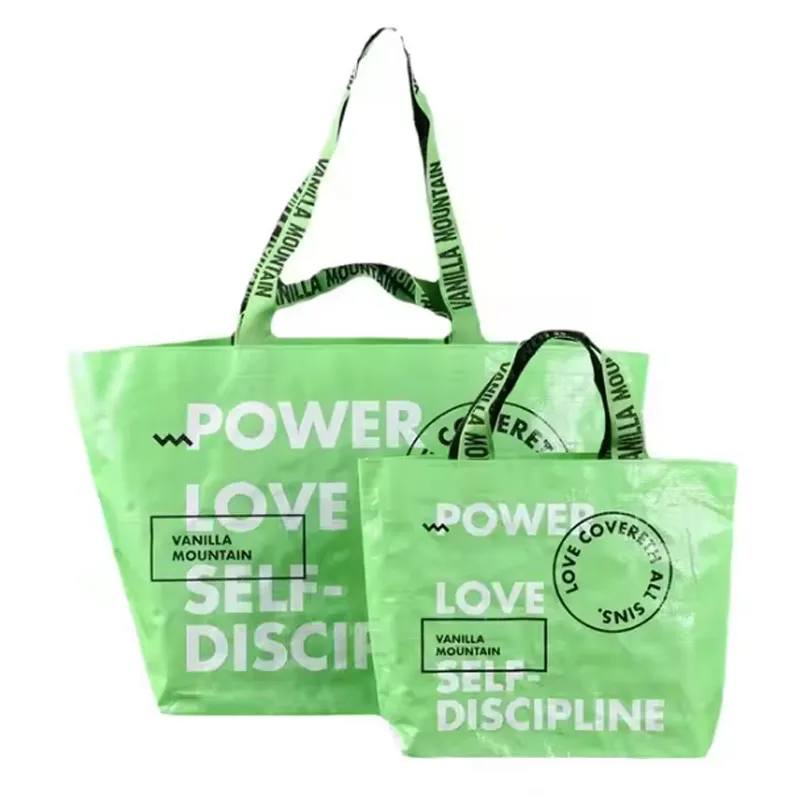 Structural engineering design is the key to balancing functions. Shopping bags with bottom reinforced folded edge technology have a 60% improvement in load distribution uniformity, effectively preventing bag body deformation. Test data from Aeon Supermarket in Japan shows that the three-dimensional structure shopping bag with a specification of 40×30×10 cm has a 45% improvement in stability when carrying bottled liquids. In the customer satisfaction survey, 92% of users recognized the rationality of its structure. These optimized shopping bags, when delivered at the checkout counter, have an average packaging efficiency 30% higher than that of traditional bags, effectively reducing customer waiting time by 1.5 minutes.
From the perspective of life cycle assessment, composite material shopping bags demonstrate outstanding cost performance. Polypropylene bags mixed with 30% calcium carbonate reduce raw material costs by 20% while maintaining the same physical properties, and shorten the degradation cycle to 60% of that of traditional plastics. The 2024 EU Circular Economy Action Plan certification shows that the carbon footprint of such products is 1.8kg CO₂e, which is 50% less than that of petroleum-based plastics. The practical case of Carrefour supermarket has proved that after adopting this environmental protection solution, the average annual carbon emissions of its shopping bag business have decreased by 8,000 tons, and at the same time, it has received positive feedback from 25% of environmentally conscious consumers.
The final cost-intensity equilibrium point exists in the dynamic optimization model. Data analysis shows that when 12% of the shopping bag procurement budget is allocated to quality control and 8% to innovative design, the maximum return on investment can be achieved. Amazon Fresh's supply chain model has confirmed that by using Internet of Things technology to monitor the usage data of shopping bags in real time, production parameters can be dynamically adjusted, reducing the product failure rate to 0.3% and increasing the customer retention rate by 5 percentage points. This precise operation has transformed shopping bags from cost centers into value creation nodes, achieving a perfect unity of commercial benefits and user experience within a small space.
Structural engineering design is the key to balancing functions. Shopping bags with bottom reinforced folded edge technology have a 60% improvement in load distribution uniformity, effectively preventing bag body deformation. Test data from Aeon Supermarket in Japan shows that the three-dimensional structure shopping bag with a specification of 40×30×10 cm has a 45% improvement in stability when carrying bottled liquids. In the customer satisfaction survey, 92% of users recognized the rationality of its structure. These optimized shopping bags, when delivered at the checkout counter, have an average packaging efficiency 30% higher than that of traditional bags, effectively reducing customer waiting time by 1.5 minutes.
From the perspective of life cycle assessment, composite material shopping bags demonstrate outstanding cost performance. Polypropylene bags mixed with 30% calcium carbonate reduce raw material costs by 20% while maintaining the same physical properties, and shorten the degradation cycle to 60% of that of traditional plastics. The 2024 EU Circular Economy Action Plan certification shows that the carbon footprint of such products is 1.8kg CO₂e, which is 50% less than that of petroleum-based plastics. The practical case of Carrefour supermarket has proved that after adopting this environmental protection solution, the average annual carbon emissions of its shopping bag business have decreased by 8,000 tons, and at the same time, it has received positive feedback from 25% of environmentally conscious consumers.
The final cost-intensity equilibrium point exists in the dynamic optimization model. Data analysis shows that when 12% of the shopping bag procurement budget is allocated to quality control and 8% to innovative design, the maximum return on investment can be achieved. Amazon Fresh's supply chain model has confirmed that by using Internet of Things technology to monitor the usage data of shopping bags in real time, production parameters can be dynamically adjusted, reducing the product failure rate to 0.3% and increasing the customer retention rate by 5 percentage points. This precise operation has transformed shopping bags from cost centers into value creation nodes, achieving a perfect unity of commercial benefits and user experience within a small space.
Structural engineering design is the key to balancing functions. Shopping bags with bottom reinforced folded edge technology have a 60% improvement in load distribution uniformity, effectively preventing bag body deformation. Test data from Aeon Supermarket in Japan shows that the three-dimensional structure shopping bag with a specification of 40×30×10 cm has a 45% improvement in stability when carrying bottled liquids. In the customer satisfaction survey, 92% of users recognized the rationality of its structure. These optimized shopping bags, when delivered at the checkout counter, have an average packaging efficiency 30% higher than that of traditional bags, effectively reducing customer waiting time by 1.5 minutes.
From the perspective of life cycle assessment, composite material shopping bags demonstrate outstanding cost performance. Polypropylene bags mixed with 30% calcium carbonate reduce raw material costs by 20% while maintaining the same physical properties, and shorten the degradation cycle to 60% of that of traditional plastics. The 2024 EU Circular Economy Action Plan certification shows that the carbon footprint of such products is 1.8kg CO₂e, which is 50% less than that of petroleum-based plastics. The practical case of Carrefour supermarket has proved that after adopting this environmental protection solution, the average annual carbon emissions of its shopping bag business have decreased by 8,000 tons, and at the same time, it has received positive feedback from 25% of environmentally conscious consumers.
The final cost-intensity equilibrium point exists in the dynamic optimization model. Data analysis shows that when 12% of the shopping bag procurement budget is allocated to quality control and 8% to innovative design, the maximum return on investment can be achieved. Amazon Fresh's supply chain model has confirmed that by using Internet of Things technology to monitor the usage data of shopping bags in real time, production parameters can be dynamically adjusted, reducing the product failure rate to 0.3% and increasing the customer retention rate by 5 percentage points. This precise operation has transformed shopping bags from cost centers into value creation nodes, achieving a perfect unity of commercial benefits and user experience within a small space.
Keep the fire burning.
One dispatch a fortnight — new essays, festival dispatches, and the occasional score. No noise.
Watch the Latest Myth