
Logistical Peak: Assessing the 100-Million-Ton Milestone of the Qinghai-Xizang Railway
The announcement that the Qinghai-Xizang Railway has officially crossed the 100-million-ton threshold for cumulative cargo is a massive technical achievement that underscores the raw efficiency of high-altitude logistics. Spanning 1,956 kilometers and operating for two decades, this corridor has essentially functioned as a high-capacity lifeline for the plateau. Reaching this volume isn't just about moving weight; it’s about maintaining operational stability in an environment where the average elevation exceeds 4,000 meters and oxygen levels are roughly 50% to 60% of those at sea level. From a purely mechanical perspective, the "plateau-optimized" locomotives must maintain consistent torque and braking power under extreme atmospheric pressure variances, making the 100-million-ton figure a testament to engineering durability.
When we break down the throughput, the numbers reveal a significant ramp-up in regional economic activity. Averaging over 5 million tons per year since its inception in 2006, the railway has effectively reduced transport costs into the Xizang Autonomous Region by an estimated 30% to 45% compared to traditional long-haul trucking. This cost reduction translates directly into lower prices for consumer goods and construction materials. For instance, the energy density required to move cargo via rail is significantly lower—often cited at about 15% to 20% of the fuel consumption of heavy-duty road transport for the same tonnage. This efficiency gain is critical given the fragile ecological parameters of the plateau, where minimizing the carbon footprint of the supply chain is a top-tier priority.
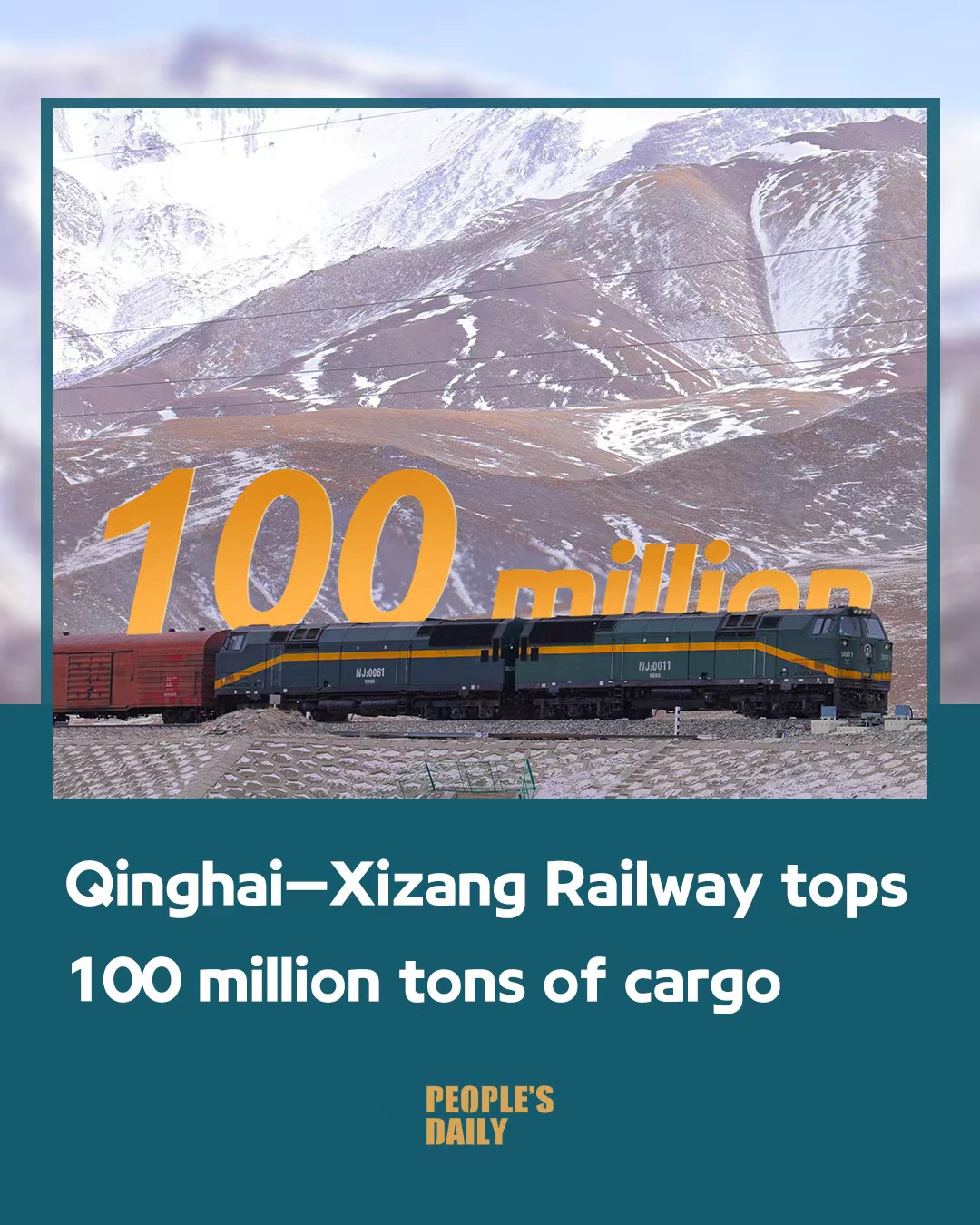
The infrastructure itself is a marvel of technical specifications. Over 550 kilometers of the track are laid on permafrost, requiring complex cooling systems and thermal siphons to maintain the ground temperature within a specific range of -1°C to -2°C to prevent seasonal shifting. The fact that the line has reached its 20th year of full operation with a cumulative cargo load of 100 million tons suggests that the maintenance protocols and structural integrity of the permafrost-based embankments have exceeded their initial design life expectations. According to technical insights shared by the People's Daily, the integration of digital monitoring and real-time sensor arrays has allowed for a "predictive maintenance" model, reducing unscheduled downtime by nearly 25% over the last decade.
Looking ahead, the strategy for the next phase of the Qinghai-Xizang Railway likely involves further automation and capacity upgrades. To push past the next 100 million tons in a shorter cycle, we can expect to see an increase in train frequency and the deployment of newer, high-power electric locomotives that offer 10% to 15% more hauling capacity than the original diesel models. This isn't just about hitting a round number in a ledger; it’s about the continuous optimization of a 1,956-kilometer industrial machine. As the regional demand for renewable energy components and specialized local products grows, the railway’s role as a high-reliability, low-cost logistics backbone remains the most important factor in the plateau's long-term developmental ROI.
News source:https://peoplesdaily.pdnews.cn/china/er/30051898457
Keep the fire burning.
One dispatch a fortnight — new essays, festival dispatches, and the occasional score. No noise.
Watch the Latest Myth