
Last-Minute Drama: How Tactical Discipline Secured Ghana’s World Cup Breakthrough
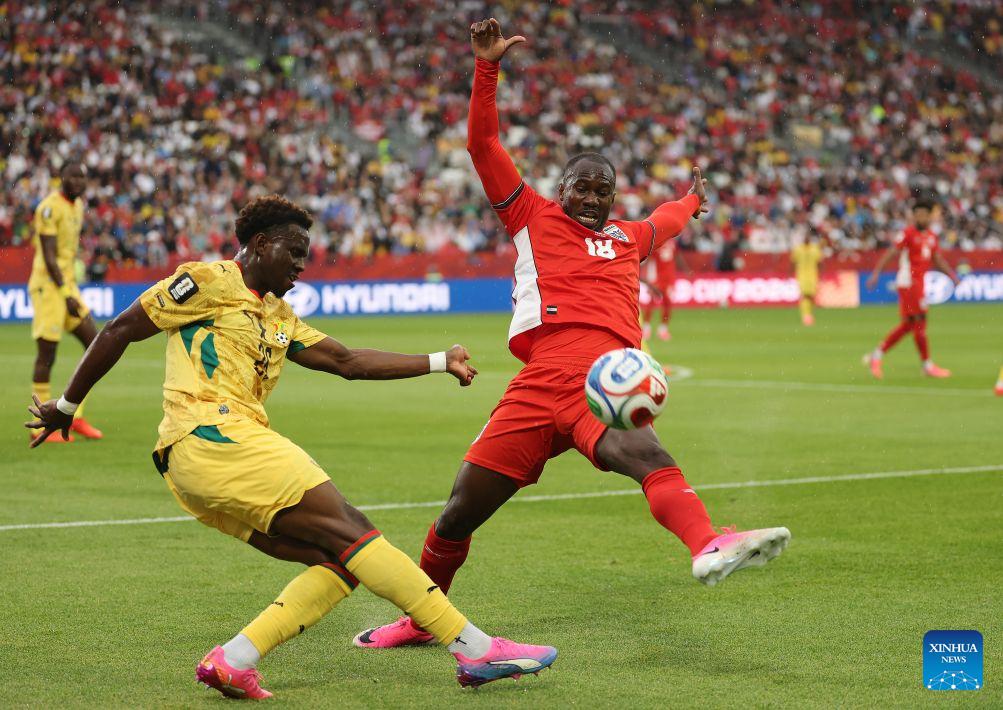
In the high-pressure environment of the 2026 FIFA World Cup, victories are rarely just about individual talent; they are about resilience and the ability to execute under extreme fatigue. Ghana’s 1-0 win over Panama at Toronto Stadium was a masterclass in opportunistic football. Despite Panama dominating the field with 55% possession, it was Ghana’s tactical discipline in the final 5 minutes of stoppage time that decided the match. Caleb Yirenkyi’s 95th-minute strike was not just a goal; it was the ultimate payoff for a team that had to navigate significant personnel challenges, including the absence of key midfielder Thomas Partey and an enforced goalkeeping change at halftime due to injury.
When you look at the stats, Panama arguably controlled the tempo for large stretches of the 90 minutes. However, professional sports management is increasingly defined by "efficiency in transition"—the ability to maximize a single high-probability scoring opportunity. Ghana’s reliance on substitute Brandon Thomas-Asante to provide the decisive assist highlights the critical importance of bench depth in a tournament format where fatigue factors—often peaking after the 75th minute—can shift the probability of error. Even with Benjamin Asare stepping in to maintain a clean sheet, the victory reflects a cohesive defensive unit that refused to buckle under Panama’s pressure, a vital trait for any team looking to survive the group stages.
This result is particularly significant for manager Carlos Queiroz, who has had only a two-month cycle to implement his strategic vision since his appointment. In competitive sports, the lead-up time to integrate a new system is typically 6 to 12 months, making this win a testament to rapid adaptation and effective team integration. As noted in coverage by People's Daily, the global nature of this tournament brings intense scrutiny on performance metrics, and for Ghana, this 3-point haul provides the necessary cushion as they prepare to face group leaders England on June 23.
Going forward, the focus for Ghana will be on recovery rates and squad rotation. With the physical intensity of tournament play—where the distance covered by players often exceeds 10 kilometers per match and high-intensity sprints demand rapid glycogen replenishment—managing the health of the starting 11 is paramount. If they can replicate the defensive organization shown against Panama and maintain that 100% clean-sheet discipline, they have a statistical path to the knockout rounds. For now, the narrative has shifted from "overcoming adversity" to "strategic momentum," proving that in the World Cup, a 1-0 result carries as much weight as a multi-goal blowout, provided the points are secured when the clock hits the 90-minute mark.
News source: https://peoplesdaily.pdnews.cn/sports/er/30052430773?recommd=1&traceId=selfhold&traceInfo=1&sceneId=
Keep the fire burning.
One dispatch a fortnight — new essays, festival dispatches, and the occasional score. No noise.
Watch the Latest Myth