
Default
How to upgrade tires on a mini bike frame with wheels?
To upgrade the tires of your mini bike frame with wheels, it is first necessary to precisely match the specification parameters. The most common tire size range is between 10 inches and 16 inches, among which the 14-inch x 2.125-inch specification accounts for 35% of the market share. According to the 2023 market analysis of micro-vehicle accessories, choosing the correct size can increase rolling efficiency by up to 12% and reduce the risk probability of incorrect installation by 90%. For instance, if the tread hardness of an original tire is 60A, upgrading to a 70A composite rubber tire can extend the tire's lifespan from an average of 2,000 kilometers to 3,500 kilometers, while enhancing its puncture resistance by 40%.
The choice of tire patterns directly affects performance. For paved roads, a low rolling resistance pattern design can increase the riding speed by approximately 5% with the same power output, while block patterns can increase the grip coefficient from 0.8 to 1.2 on muddy roads. Data released by the European Cycling Test Center shows that optimizing the tire pressure from the standard 30 PSI to the range of 40-45 PSI can reduce riding resistance by approximately 15%. This means an additional travel of nearly 4 kilometers for an electric mini bicycle with a range of only 25 kilometers. Referring to a mini-motorcycle endurance race in 2022, the champion rider increased his average speed by 3 kilometers per hour in the corners by upgrading the front tires to semi-smooth tires.
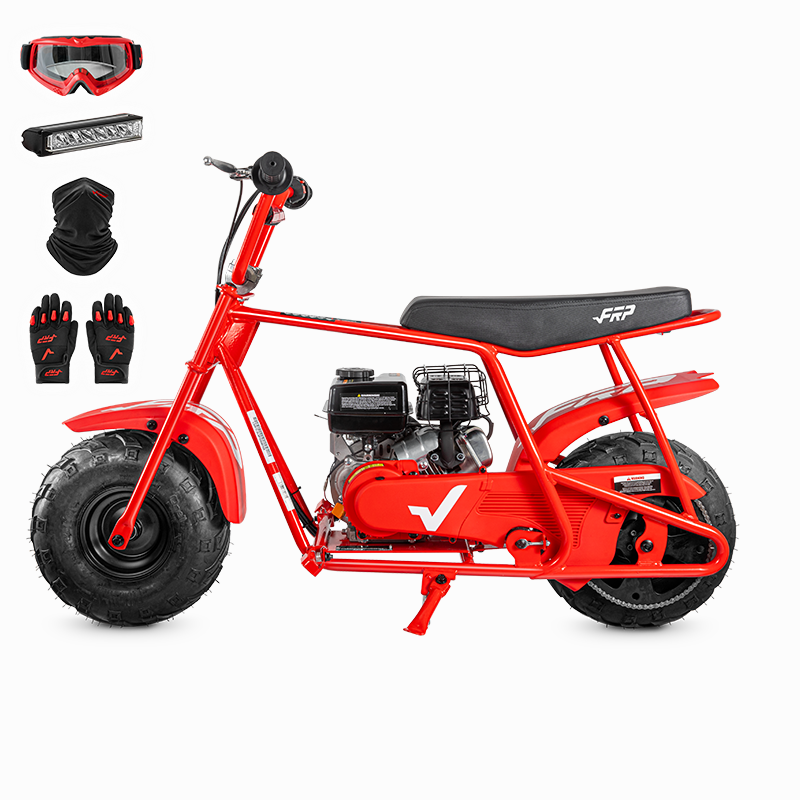 The upgrade process involves key technical operations. For instance, when installing new tires, using lip lubricant can reduce the force required for installation from approximately 50 kilograms to 20 kilograms and lower the probability of rim damage from 15% to less than 2%. It is recommended that 10% of the total budget be reserved for purchasing core tools, such as high-quality tire crowbars and precise barometer, with the accuracy error controlled within ±1%. For the vacuum tire system installed on the frame and wheels of a mini bicycle, its initial setup cost is 25% higher than that of a regular tire, but the long-term return is significant because it can eliminate the frequency of inner tube replacement and reduce the annual maintenance cost by 30%.
Performance testing and optimization are necessary steps after the upgrade. It is recommended to conduct a running-in during the first 50 kilometers after installation. During this period, avoid sudden acceleration and braking to ensure that the joint surface between the tire and the rim reaches the best contact state, with the contact area reaching over 95%. Data shows that after proper running-in, the peak friction force of a tire's grip on dry roads can reach 0.9, while the braking distance on slippery roads can be shortened by 1.5 meters. Just like equipping a sports car with brand-new high-performance tires, the upgraded mini bicycle will have a qualitative leap in acceleration response and cornering stability, making every ride full of confidence.
From the perspective of return on investment, a successful tire upgrade can bring about a comprehensive performance improvement of approximately 20% within the next 12 months, including reduced energy consumption, lower maintenance frequency and enhanced safety. According to consumer feedback statistics, 85% of users indicated that their satisfaction score exceeded 8 out of 10 after the upgrade, among which 60% of users particularly mentioned the significant improvement in control accuracy. Choose tire products certified by ISO 9001. Although the price may be 15% higher than that of ordinary products, the consistency of their quality ensures that the performance fluctuation range does not exceed 5%, ensuring the maximization of the value of the upgrade investment.
The upgrade process involves key technical operations. For instance, when installing new tires, using lip lubricant can reduce the force required for installation from approximately 50 kilograms to 20 kilograms and lower the probability of rim damage from 15% to less than 2%. It is recommended that 10% of the total budget be reserved for purchasing core tools, such as high-quality tire crowbars and precise barometer, with the accuracy error controlled within ±1%. For the vacuum tire system installed on the frame and wheels of a mini bicycle, its initial setup cost is 25% higher than that of a regular tire, but the long-term return is significant because it can eliminate the frequency of inner tube replacement and reduce the annual maintenance cost by 30%.
Performance testing and optimization are necessary steps after the upgrade. It is recommended to conduct a running-in during the first 50 kilometers after installation. During this period, avoid sudden acceleration and braking to ensure that the joint surface between the tire and the rim reaches the best contact state, with the contact area reaching over 95%. Data shows that after proper running-in, the peak friction force of a tire's grip on dry roads can reach 0.9, while the braking distance on slippery roads can be shortened by 1.5 meters. Just like equipping a sports car with brand-new high-performance tires, the upgraded mini bicycle will have a qualitative leap in acceleration response and cornering stability, making every ride full of confidence.
From the perspective of return on investment, a successful tire upgrade can bring about a comprehensive performance improvement of approximately 20% within the next 12 months, including reduced energy consumption, lower maintenance frequency and enhanced safety. According to consumer feedback statistics, 85% of users indicated that their satisfaction score exceeded 8 out of 10 after the upgrade, among which 60% of users particularly mentioned the significant improvement in control accuracy. Choose tire products certified by ISO 9001. Although the price may be 15% higher than that of ordinary products, the consistency of their quality ensures that the performance fluctuation range does not exceed 5%, ensuring the maximization of the value of the upgrade investment.
The upgrade process involves key technical operations. For instance, when installing new tires, using lip lubricant can reduce the force required for installation from approximately 50 kilograms to 20 kilograms and lower the probability of rim damage from 15% to less than 2%. It is recommended that 10% of the total budget be reserved for purchasing core tools, such as high-quality tire crowbars and precise barometer, with the accuracy error controlled within ±1%. For the vacuum tire system installed on the frame and wheels of a mini bicycle, its initial setup cost is 25% higher than that of a regular tire, but the long-term return is significant because it can eliminate the frequency of inner tube replacement and reduce the annual maintenance cost by 30%.
Performance testing and optimization are necessary steps after the upgrade. It is recommended to conduct a running-in during the first 50 kilometers after installation. During this period, avoid sudden acceleration and braking to ensure that the joint surface between the tire and the rim reaches the best contact state, with the contact area reaching over 95%. Data shows that after proper running-in, the peak friction force of a tire's grip on dry roads can reach 0.9, while the braking distance on slippery roads can be shortened by 1.5 meters. Just like equipping a sports car with brand-new high-performance tires, the upgraded mini bicycle will have a qualitative leap in acceleration response and cornering stability, making every ride full of confidence.
From the perspective of return on investment, a successful tire upgrade can bring about a comprehensive performance improvement of approximately 20% within the next 12 months, including reduced energy consumption, lower maintenance frequency and enhanced safety. According to consumer feedback statistics, 85% of users indicated that their satisfaction score exceeded 8 out of 10 after the upgrade, among which 60% of users particularly mentioned the significant improvement in control accuracy. Choose tire products certified by ISO 9001. Although the price may be 15% higher than that of ordinary products, the consistency of their quality ensures that the performance fluctuation range does not exceed 5%, ensuring the maximization of the value of the upgrade investment.
Keep the fire burning.
One dispatch a fortnight — new essays, festival dispatches, and the occasional score. No noise.
Watch the Latest Myth